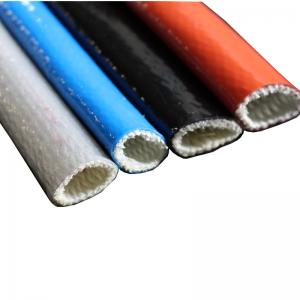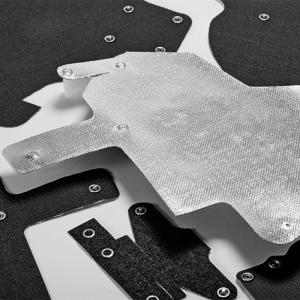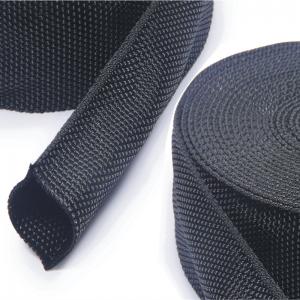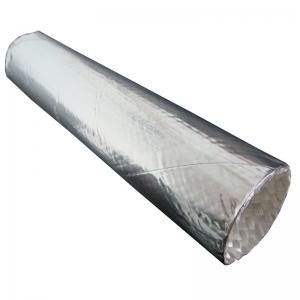
The end of a fire sleeve has two different jobs to address: protecting the exposed textile edge and keeping the sleeve in its intended position. End seal tape and a retention clamp can work together, but they are not interchangeable. Neither is a repair for a leaking hose or fitting.
For a hose assembler, a useful fire sleeve termination detail identifies where the sleeve stops, how the cut edge is treated and where any retaining band sits. These details should be settled before production rather than left to the installer at the end of the job.
This guide focuses on end finishing for silicone-coated fiberglass sleeves in the BSTFLEX fire sleeve range. Use it to prepare an installation drawing and inspection checklist. The approved instructions for the specific hose, sleeve and accessories take precedence over a general guide.
| Component | Function in the assembly | What to specify |
|---|---|---|
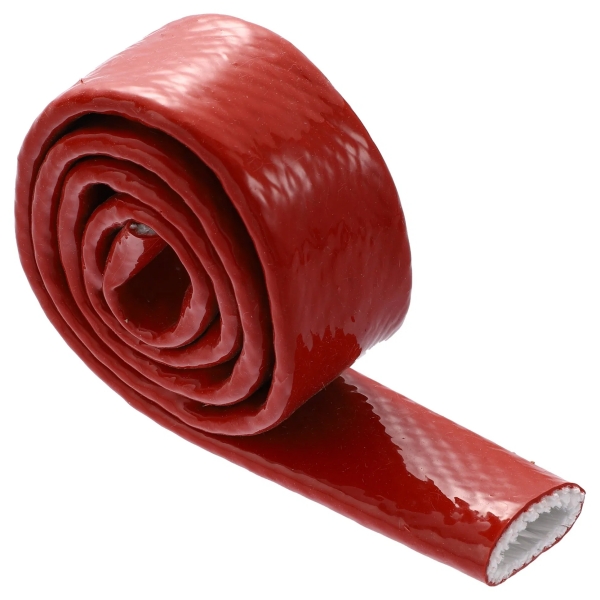
| Silicone-coated fiberglass sleeve | Provides the main external thermal protection around the designated section. | Construction, inside diameter, coverage length and applicable performance requirements. |
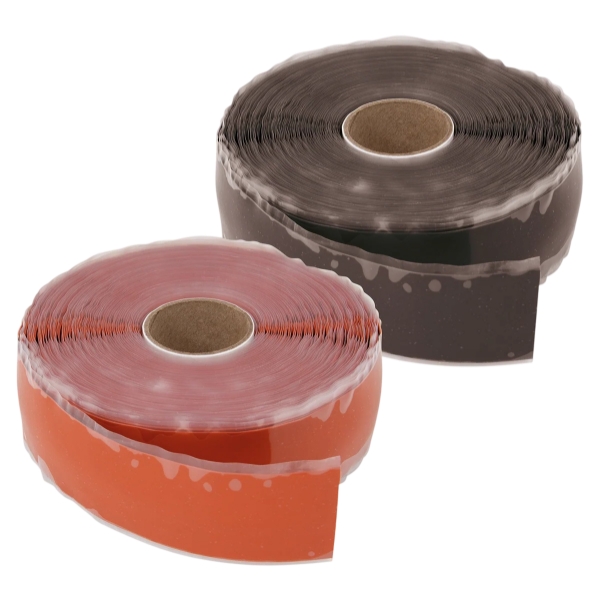
| Self-fusing silicone end seal tape | Finishes the exposed end and helps limit contamination entering the textile edge. | Tape grade, width, thickness, coverage and application instructions. |
| Specified retention clamp or band | Secures the sleeve at the designated attachment location. | Hardware, location, installation tool and tightening or tensioning requirements. |
Keeping these functions separate prevents two common specification errors: treating a tight band as a complete end seal, or assuming a wrap of tape replaces a required mechanical retainer.
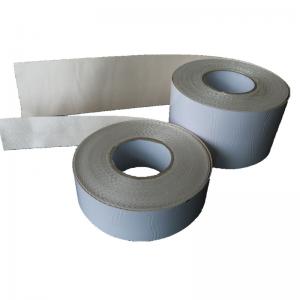
The BSTFLEX Silicone Firesleeve Tape is a self-fusing silicone rubber accessory. Its overlapping layers bond to one another without a pressure-sensitive adhesive. It is intended for local sealing and reinforcement within a firesleeve system, not as a replacement for the insulating sleeve.
At a cut end, the tape provides a finishing layer over the specified edge area. Do not interpret that local treatment as proof that the entire assembly is waterproof, pressure-tight or qualified to contain a hose rupture. Those are separate requirements.
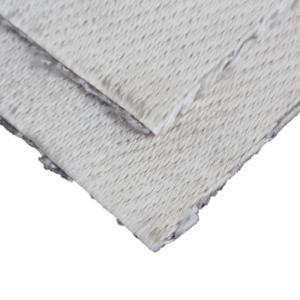
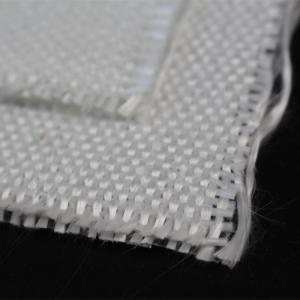
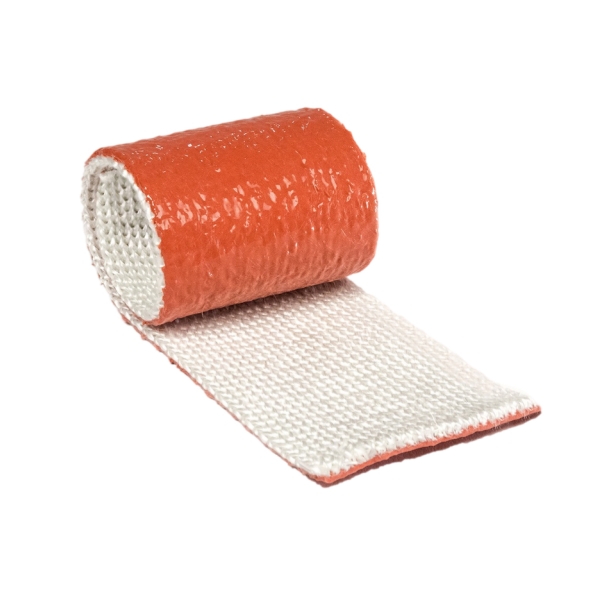
Also distinguish self-fusing silicone tape from silicone-coated fiberglass tape. The latter contains a textile reinforcement and is a different product construction. A purchase order that says only "red fire tape" leaves the material unresolved.
Mark the beginning and end of the required thermal coverage on the hose assembly drawing. Then identify the permitted sealing and retention zones relative to the fitting. Do not use an arbitrary distance from the hose end as a substitute for that detail.
Where the approved arrangement carries the sleeve over a fitting socket, establish how far it extends and where the retainer is positioned. Preserve access to threads, sealing faces, wrenching areas and inspection features as required by the assembly instructions. Do not bridge a component that must rotate with a rigidly fixed termination.
Set the sleeve cut length from the intended installed arrangement. Check its fit along the route before finishing both ends. The fire sleeve size chart and fitting-clearance guide covers the separate checks for hose outside diameter and fitting passage.
For equipment already in service, follow its shutdown and energy-isolation procedure. Control stored hydraulic, mechanical and thermal energy, and verify the safe condition before working. Stopping the pump alone is not a complete isolation check.
Have a leaking or damaged hose assessed before adding protection. End tape must not conceal an unresolved defect. Keep hands away from pressurized connections and never loosen a fitting to determine whether pressure remains.
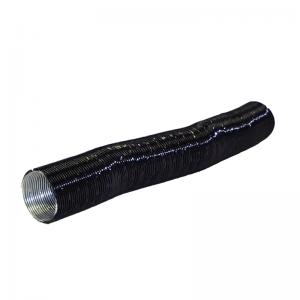
The EFRS braided silicone fiberglass fire sleeve can be cut with scissors. Support the material and cut it to the specified length using suitable sharp shears. Prefer cutting on a work surface before installation rather than bringing a blade against the hose beneath it.
Inspect the edge before sealing it. Remove loose cutting debris without pulling yarns out of the sleeve. Do not burn the edge or add an unspecified adhesive to make it look tidy. A damaged end should be corrected within the approved length and rework requirements.
Some assembly instructions require edge treatment before the sleeve is positioned; others define a finishing operation afterward. Establish the sequence for the selected system. Do not change an approved liquid end treatment to tape, or reverse tape and clamp positions, without reviewing the substitution.
On a new hose assembly, keep the sleeve clear of fitting-assembly tooling until the approved process calls for positioning it. On a finished assembly, stop if the sleeve cannot pass the fitting without damage. End sealing cannot correct an unsuitable sleeve size.
Begin with a clean, dry application area. Use only a cleaning method compatible with the hose, sleeve and tape. Resolve the source of any oil contamination before wrapping over the area.
Follow the selected tape's instructions for stretch and overlap. Maintain contact between successive layers and press them together. At a change in diameter, inspect for folds or a wrap that spans a gap instead of following the surface. Finish over the defined edge area without obstructing the fitting's working features.
Do not copy a fixed overlap percentage, number of turns or waiting time from another tape. Put the applicable values and release-to-service conditions in the work instruction. Self-fusing behavior does not mean every grade has the same application requirements.
The Silicone Firesleeve Tape technical overview describes the product's accessory role and general application method. Request the additional process details needed for the proposed termination.
Position the clamp only in the retention zone specified for the assembly. A fitting socket may provide that location in an approved design; it is not a universal instruction for every hose end. Do not relocate a band onto an unsupported flexible section simply because it is easier to reach.
For an OEM installation drawing, identify the support beneath the band, its width and its distance from a fixed reference. Also show whether the band sits over tape, beside it or in another qualified arrangement. These details make the finished assembly inspectable.
Select hardware for the outside dimensions of the completed termination, including the sleeve and any tape beneath the band. Hose bore is not a clamp-size specification. Use the designated installation tool and the hardware supplier's tensioning or torque requirement; there is no single tightening value for all firesleeve clamps.
After installation, check for cutting, pinching, displaced layers and sharp projecting hardware. Do not substitute a general-purpose plastic cable tie, wire or another clamp solely because it fits. An alternative needs acceptance for the actual retention, temperature and exposure requirements.
Use the following as a starting checklist when approving the drawing and a first-off sample. Set measurable acceptance criteria where the application requires them.
| Inspection point | Check before release |
|---|---|
| Coverage position | The sleeve starts and finishes at the specified locations without leaving a required protected section exposed. |
| Edge finish | The designated cut-edge area is treated, with no loose yarns or unapproved damage hidden underneath. |
| Tape application | The specified material, overlap and finishing method are used; layers are not visibly bridged, lifted or contaminated. |
| Retention hardware | The correct band is installed in its defined zone using the specified setting and tool. |
| Fitting function | Required connection, wrenching and inspection features remain usable. |
| Route and movement | The sleeve remains correctly positioned throughout the required route and safely evaluated movement. |
| Traceability | The accepted sleeve, tape, hardware and drawing revision are recorded. |
A visual check does not demonstrate a flame rating or validate resistance to a particular fluid. Where those properties are required, obtain evidence covering the proposed construction and installation. Do not transfer a result for a sleeve body alone to a different finished termination without review.
On an openable sleeve, consider the effect of the end treatment on future access. A continuous wrap around the closure can prevent the cover from opening until the tape is removed. That may be acceptable, but the maintenance instruction should identify the consumable end treatment that must be renewed.
Do not use end tape to compensate for a longitudinal closure that will not engage correctly. Compare the installation formats in the removable fire sleeve guide for existing hoses, then define an end detail that preserves the intended service access.
Do not treat them as interchangeable. Specify the required material and application conditions. A similar appearance or convenient roll width does not establish equivalent behavior in a high-temperature firesleeve termination.
A properly specified edge treatment is intended to reduce exposure of the textile end to external contamination. Its effectiveness depends on the material, coverage and installed condition. It is not a remedy for fluid escaping from the hose underneath.
The approved termination determines the required components. Some arrangements specify a particular end treatment and retainer; another construction may use a different detail. Do not omit specified hardware because the tape feels secure during handling.
Do not assume a local wrap restores the original protection. Have the damage assessed against the sleeve's approved repair or replacement criteria. Replacement is appropriate where the required condition cannot be demonstrated.
A repeat order should identify more than sleeve diameter and color. Include the protected length, fitting drawing, end-treatment zone, tape specification and any required retention hardware. Add the service temperature, expected fluids, inspection criteria and finished-assembly photographs.
For tape quotations, provide width, roll length, color and quantity. For a matched sleeve-and-tape evaluation, include the proposed assembly drawing and the relevant thermal requirements. This gives purchasing and production a defined configuration to approve.
BSTFLEX supplies silicone-coated fiberglass fire sleeves and self-fusing silicone firesleeve tape. Request product data, samples or an OEM quotation with the end-detail drawing so the proposed materials can be evaluated as part of the complete installation.

 English
 français
 Deutsch
 русский
 italiano
 español
 português
 Nederlands
 العربية
 한국의
한국의 Türkçe
 Polski
 Tiếng Việt
 slovenský
 Indonesia