選択するファブリック伸縮継手そして金属製伸縮継手どちらの製品がより丈夫か、どちらの材料がより高温に耐えられるかといった単純な問題ではありません。適切な選択は、システムの動作方法、作動圧力、通過する媒体、ダクトやパイプのサイズ、接続機器に伝達できる負荷量などによって決まります。
一般的に、布製の伸縮継手は、熱風、排気ガス、または煙道ガスを運ぶ大型の低圧ダクトシステムにおいて非常に効果的である一方、金属製のベローズは、圧力保持と機械的強度が重要な加圧配管およびプロセスシステムにおいて一般的に選択される。
以下の比較では、それぞれの設計が最も優れた性能を発揮する場面と、伸縮継手を選定する前に評価すべき要素について説明します。
迅速な決定:
選択してくださいファブリック伸縮継手用途が大型ダクト、低圧、大きな横方向または複合的な動き、振動、高温ガス、または許容される反力荷重の制限を伴う場合。
選択してください金属製伸縮継手用途が加圧配管、蒸気、液体、高い機械的負荷、または金属製ベローズを中心に設計されたシステムを含む場合。
| 選考基準 | ファブリック伸縮継手 | 金属製伸縮継手 |
|---|---|---|
| 標準的なサービス | 工業用ダクトおよびガス媒体 | 配管、容器、およびエンジニアリングされたプロセスシステム |
| 耐圧性能 | 主に低圧用途 | 大幅に高い圧力に対応できるように設計できる |
| 大型ダクトサイズ | 非常に適切 | 可能だが、通常は機械的に複雑になる |
| 軸方向の動き | 適切に設計されていれば素晴らしい | 適切な蛇腹形状であれば非常に優れている |
| 横方向の動き | コンパクトな配置でも高い移動能力を発揮 | 通常は適切な蛇腹構成が必要となる |
| 角度運動 | 複合動作に対応可能 | エンジニアリング構成で利用可能 |
| 振動遮断 | 非常に優れた柔軟性 | アプリケーションに依存する |
| スプリングフォース | 一般的に低い | ベローズは測定可能なバネ力を発生させる |
| 材料システム | 複合繊維、膜、断熱材 | 金属合金製ベローズ |
| 共通メディア | 熱風、排気ガス、煙道ガス、プロセスガス | 蒸気、液体、気体、およびプロセス流体 |
| 典型的な形状 | 円形、長方形、および大型のカスタム形状 | 主に円形だが、長方形の設計も可能 |
選定プロセスを開始する最も簡単な方法の1つは、伸縮継手が大型の工業用ダクトに設置されるのか、それとも加圧配管システムに設置されるのかを判断することです。
A非金属製ファブリック伸縮継手特に大型の空気・ガスダクトに適しています。これらのシステムは、発電所、セメント工場、製鉄所、工業炉、集塵システム、燃焼装置、排気設備などでよく見られます。
プロセス媒体は通常気体であり、圧力は加圧されたプロセス配管に比べて比較的低い場合が多い。
金属製伸縮継手は、薄く成形された金属製の波形部材を用いて、圧力保持を維持しながら柔軟性を実現します。金属製ベローズは、蒸気、プロセス配管、石油化学、化学、その他圧力が重要な設計要件となるエンジニアリングシステムにおいて広く使用されています。
このアプリケーション環境の違いが、両技術間のパフォーマンスの違いの多くを説明している。
圧力は、布製伸縮継手と金属製ベローズを区別する最初の要因となることが多い。
布製ジョイントは、主に低圧ダクト用途向けに設計されています。その柔軟な構成要素は、圧力を保持する金属製ベローズではなく、コーティングされた布地、補強層、シーリング膜、および断熱材で構成されています。
これらは一般的に以下の場所で見られます。
金属製のベローズは、かなり高い内部圧力に耐えられるように設計できる。その複雑な形状の金属壁は、柔軟性と圧力保持の両方を提供するように設計されている。
これにより、金属製伸縮継手は以下のような用途に適しています。
選択ルール:相当なシステム圧力を保持する必要がある場合は、通常、まず金属製ベローズを検討すべきです。布製伸縮継手は、耐圧性のある金属製ベローズの直接の代替品として扱うべきではありません。
動きのある生地こそ、デザインが特に魅力的に映る部分だ。
布製のベルトは比較的広い範囲で変形することができる。そのため、複数の成形された金属製の波状構造に頼ることなく、軸方向、横方向、および角度方向の大きな変位に対応できる。
熱膨張が複数の方向に発生するような大型ダクトシステムの場合、これにより伸縮継手の配置を大幅に簡素化できる。
金属製の蛇腹もこれらの動きに対応できますが、蛇腹の構造はそれらの動きに合わせて特別に設計する必要があります。
For example, larger lateral displacement may require a universal metallic expansion joint with multiple bellows and a center pipe rather than a single bellows element.
Therefore, when large lateral or combined movement is required in a low-pressure duct, afabric expansion jointis often the more practical design.
This is an important engineering difference that is often overlooked during purchasing.
A metallic bellows behaves like a mechanical spring. When it is compressed, extended or laterally displaced, it generates reaction forces that must be considered in the piping design.
These forces may influence:
Fabric expansion joints generally produce much lower spring forces because the flexible textile element is considerably softer than formed metal bellows.
For large duct systems connected to fans, furnaces or lightweight structural components, reducing these reaction loads can be a major advantage.
Fans, blowers, turbines and other rotating equipment can transmit vibration into connected ductwork.
A flexible fabric connector can help isolate some of this vibration because the textile belt does not create the same rigid mechanical path as solid ductwork.
This makes fabric expansion joints especially useful around:
Metal expansion joints can also accommodate vibration, but the movement amplitude, frequency and expected cycle life must be considered carefully in the bellows design.
For high-cycle vibration, neither product should be selected solely from a general product specification. Actual vibration data should be supplied to the manufacturer.
Large rectangular ductwork strongly favors fabric construction in many industrial systems.
Consider an exhaust duct measuring several meters across. Producing a metallic flexible element for such a large cross-section requires substantial metal fabrication and careful control of corner stresses.
A rectangular fabric joint can use a flexible belt installed around the perimeter of the duct, making very large dimensions more practical.
This is whyrectangular fabric expansion jointsare frequently seen in:
For these applications, size alone can significantly influence the final choice.
It is incorrect to assume that metal is always better at high temperature or that fabric automatically has a lower usable process temperature.
The two systems manage temperature differently.
Metallic bellows temperature capability is determined primarily by the selected alloy, design pressure, material strength at temperature and expected fatigue life.
Stainless steels and nickel-based alloys can be selected for elevated-temperature service.
A high-temperature fabric expansion joint may use several thermal layers rather than exposing one flexible membrane directly to the process gas.
A typical construction may include:
The insulation package can reduce the temperature reaching the external sealing materials.
Therefore, ahigh temperature fabric expansion jointshould be selected based on the full temperature gradient through the joint, not simply on the temperature rating of one fabric.
Hot flue gas and exhaust systems are among the most common applications for non-metallic designs.
These installations often combine:
That combination closely matches the strengths of fabric expansion joints.
Typical installations include:
For customized designs, BSTFLEX manufacturesNon Metallic Fabric Expansion Jointsfor industrial ducting, hot-air, flue-gas and exhaust applications.
Corrosion resistance cannot be judged simply by comparing “fabric” with “metal.”
The actual materials must be compared.
A metallic expansion joint may use corrosion-resistant stainless steel or nickel alloy when aggressive media are present.
A fabric expansion joint may use chemical-resistant barrier layers such as PTFE-coated textiles or other compatible membrane systems.
Selection should consider:
Condensation is particularly important in flue-gas systems because chemical attack may become more severe when corrosive gases condense on cooler joint surfaces.
Neither fabric nor metallic bellows should necessarily be exposed directly to severe turbulent flow or abrasive particles without protection.
A fabric joint may use:
A metallic bellows may also require an internal liner to prevent erosion, turbulent excitation or direct impingement on the convolutions.
This means gas velocity, dust loading and flow direction should always be included in the expansion joint specification.
Available space can strongly affect the decision.
A fabric joint can often absorb considerable lateral movement within a relatively short flexible span.
Metallic systems can also accommodate large displacement, but may require more complex arrangements such as universal joints, hinged joints or gimbal configurations depending on movement direction.
However, there are also piping layouts where a compact metallic bellows is the more appropriate design.
Installation space should therefore be considered together with pressure and movement rather than as an isolated factor.
Fabric flexible elements are generally lighter than comparable large metallic assemblies.
This difference becomes increasingly important as duct dimensions increase.
Lower component weight can reduce loads during:
In very large rectangular duct systems, this can be an important practical advantage.
Fabric expansion joints are often designed with replaceable flexible belts.
If the surrounding steel frames remain serviceable, maintenance may involve replacing the flexible element rather than removing the complete assembly.
This can be useful in large duct installations where removing welded steel frames would create significant shutdown work.
Metal expansion joints generally require replacement or repair of the metallic bellows assembly when the bellows itself becomes damaged.
The actual maintenance cost depends on system design, accessibility, joint size and failure mode.
There is no meaningful universal statement such as “metal lasts longer than fabric.”
Service life depends on whether the joint was correctly designed for the application.
A fabric joint can fail prematurely because of:
A metal bellows can fail because of:
Correct engineering matters more than simply choosing one material category over another.
| Application | Usually Preferred | Reason |
|---|---|---|
| Large Low-Pressure Flue Gas Duct | Fabric Expansion Joint | Large size, flexibility and multidirectional movement |
| High-Pressure Steam Pipe | Metal Expansion Joint | Pressure containment requirement |
| Large Rectangular Exhaust Duct | Fabric Expansion Joint | Practical for large custom cross-sections |
| Fan Connection | Fabric Expansion Joint | Low reaction forces and vibration isolation |
| Pressurized Chemical Pipeline | Metal Expansion Joint | Pressure and mechanical requirements |
| Cement Kiln Exhaust Duct | Fabric Expansion Joint | Hot gas, large duct and substantial movement |
| Process Piping | Metal Expansion Joint | Engineered for piping pressure and code requirements |
| Large Boiler Flue Duct | Fabric Expansion Joint | Low-pressure hot-gas application |
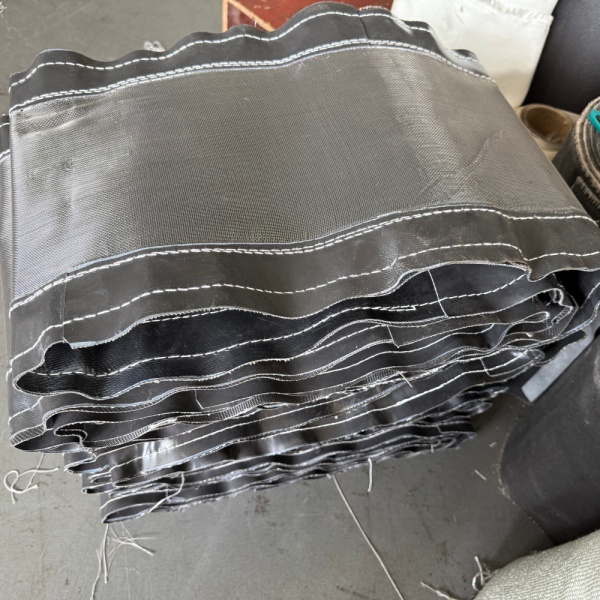
Afabric expansion jointshould be seriously considered when most of the following conditions are present:
This is the typical application envelope for anon metallic expansion joint.
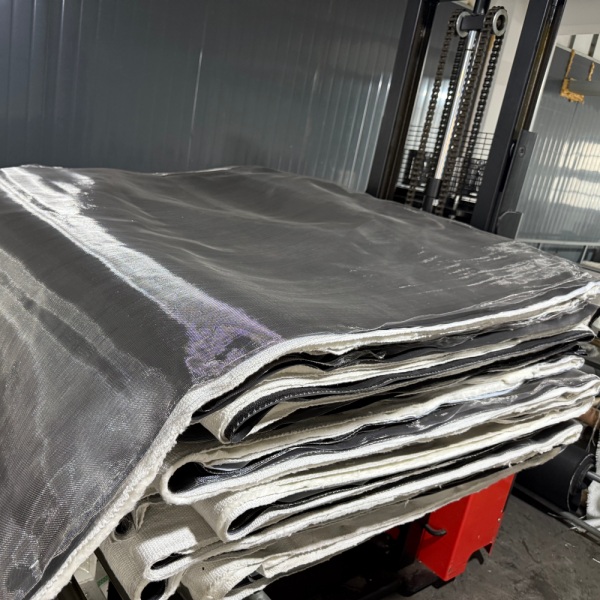
A metallic expansion joint should normally be evaluated first when:
Metallic bellows are engineered pressure-containing components and should be designed around system pressure, temperature, movement, material, fatigue life and piping loads.
Instead of asking, “Which expansion joint is better?” engineers should ask, “Which expansion joint architecture matches this system?”
Use the following sequence.
Is it a large duct or pressurized pipe?
Specify normal pressure, design pressure and whether the system operates under positive or negative pressure.
Provide both continuous operating temperature and maximum excursion temperature.
List axial compression, axial extension, lateral displacement and angular movement individually.
Specify hot air, exhaust gas, flue gas, steam, liquid or process chemical.
Include gas velocity, dust loading, abrasive particles and turbulence.
Determine how much reaction force can safely be transferred to fans, duct supports, equipment nozzles and anchors.
Confirm shape, dimensions, flange arrangement and available face-to-face installation length.
Consider a large rectangular flue-gas duct installed downstream of industrial combustion equipment.
The system has:
In this situation, a fabric expansion joint is often an efficient choice because it can combine large cross-section capability, multidirectional flexibility and low reaction forces.
Now consider a high-pressure steam line operating at elevated temperature.
Although thermal movement still exists, the system requires reliable pressure containment. A metallic bellows engineered for the piping pressure, temperature and movement is generally the appropriate technology.
These examples demonstrate why the operating system must determine the expansion joint type.
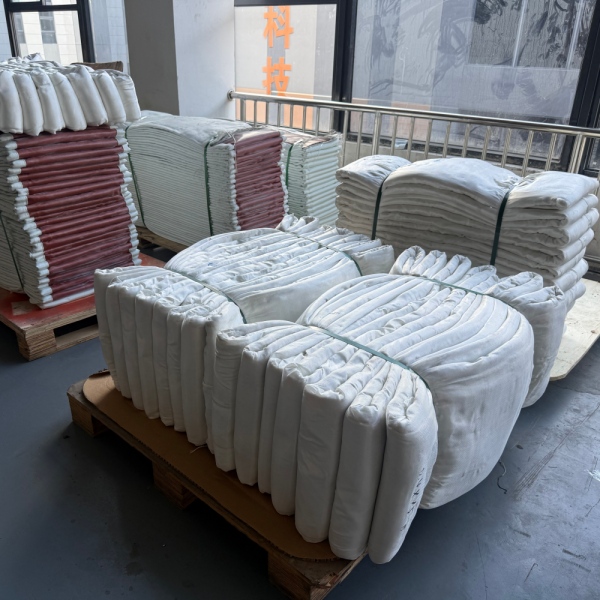
For either metallic or fabric designs, the quality of the engineering recommendation depends heavily on the information supplied.
For a custom fabric joint, BSTFLEX recommends providing:
BSTFLEX manufactures custom non-metallic expansion joints for industrial hot-air, exhaust and flue-gas ducting systems.
Depending on operating conditions, flexible constructions can incorporate technical fabrics, coated fiberglass, PTFE-based sealing layers, high-temperature insulation and protective components.
Round, rectangular and application-specific configurations can be manufactured according to customer drawings and operating data.
See theBSTFLEX 非金属ファブリック伸縮継手特注製造オプションについては、お問い合わせください。
お客様の用途で、熱風、排気ガス、または煙道ガスを運ぶ大型の工業用ダクトを使用する場合は、図面と運転条件をBSTFLEXに送付して評価を受けてください。
ダクトの寸法、温度、圧力、媒体、軸方向の動き、横方向の動き、面間距離、および数量を含めてください。

 English
 français
 Deutsch
 русский
 italiano
 español
 português
 Nederlands
 العربية
 한국의
한국의 Türkçe
 Polski
 Tiếng Việt
 slovenský
 Indonesia