English
 français
 Deutsch
 русский
 italiano
 español
 português
 Nederlands
 العربية
 한국의
한국의 Türkçe
 Polski
 Tiếng Việt
 slovenský
 Indonesia




A roll of insulation is not the part that an assembler installs. Before it reaches the equipment, the material may be unrolled, nested, cut, stacked, transferred and fitted around openings or fixing points. For an OEM buyer, the useful question is whether the selected mat can move through that sequence and still meet the drawing.
Specify stitch-bonded fiberglass needle mat by its fiber grade, reinforcing thread, stitch arrangement, finished thickness and delivery format. Then approve representative cut parts for handling, fit and the operating duty. This gives purchasing and production a common basis for comparing samples and accepting repeat orders.
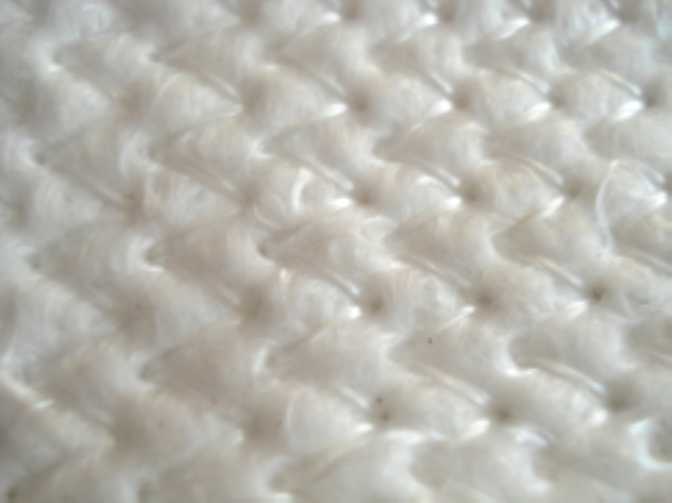
The BSTFLEX glass fiber stitch-bonded needle mat combines a needled glass-fiber insulation structure with additional yarn reinforcement. Stitch bonding is used to improve mechanical integrity; the amount of improvement and the suitable processing route depend on the specific construction. This guide focuses on converting that material into industrial insulation components.
Begin With the Insulation-Part Drawing
Identify whether the drawing describes the insulation core, a faced insulation insert or a complete equipment cover. A core outline should not be taken directly from the outside dimensions of a finished jacket without accounting for its construction.
Mark the edges and fixing holes used to locate the part during assembly. Include slots, cutouts, narrow sections, intended bends and the space available for the insulation. State whether dimensions are inspected on the flat, uncompressed part or after fitting. This is particularly useful for inserts installed inside heated equipment panels and removable covers.
Use a material callout that identifies the glass grade and reinforced construction. Specify any facing separately. The terms stitched fiberglass mat and reinforced fiberglass mat are not a complete ordering specification on their own.
Set Roll and Stitch Direction Before Nesting
Ask the supplier to identify the roll direction and stitch arrangement on the sample. Where direction matters to fitting or handling, show an orientation arrow on the part drawing. Do not approve a rotated cutting layout solely because it reduces waste.
Trial the proposed orientation around bends, openings and narrow connecting sections. Compare parts in different orientations when the design allows, and document the result. The purpose is to establish whether orientation needs control for this component, not to assume that every stitched mat behaves the same way in every direction.
For a stitch-pattern requirement, define what is being measured: spacing between stitch rows, stitch length along a row or another agreed feature. A single stitching dimension is ambiguous without that definition. Any requested value should be reviewed for manufacturing feasibility before it becomes an order requirement.
Approve the Cutting Route on Production Material
Use samples representing the proposed fiber grade, thickness and stitch construction. A trial on a thinner plain mat does not validate the cutting process for a thicker reinforced one.
Agree on a trial that reflects the intended production route, such as knife cutting or die cutting where appropriate. Record how the material is supported and held, whether it is cut in single layers or stacks, and how parts are removed after cutting. These are process variables to evaluate, not universal settings supplied by this guide.
Inspect the features that are most difficult to make: small holes, tight inside corners, narrow bridges and cuts across stitch lines. Check for incomplete cuts, dragged fibers, local tearing and thread disturbance. Evaluate edge condition after the piece is lifted and transferred, not only while it remains supported on the cutting table.
Agree on acceptable edge appearance using representative samples or photographs. Avoid vague descriptions such as perfectly clean or zero shedding unless a defined test and acceptance limit support them. Stitching that crosses the finished perimeter will be cut; distinguish a cut thread end from progressive unraveling that affects the retained part.
Check Handling Between Cutting and Installation
Send trial pieces through the actual transfer sequence. Lift them from the cutting surface, place them in the proposed packaging, move them to assembly and fit them using the intended supports. Record any damage or extra manipulation required at each stage.
For large or shaped inserts, evaluate support during lifting rather than treating a narrow section as a carrying point. For kits, identify parts clearly enough that operators do not need to repeatedly unfold or turn them to find the correct piece.
Where a cover will be opened for service, include removal and refitting in the trial. Check whether the core moves inside its facing, thins around closures or requires repositioning. Reinforcement should address an identified handling requirement; it should not be used to compensate for missing supports or an unsuitable retaining design.
Write Measurable Acceptance Criteria
An approved sample is useful, but repeat production also needs a written inspection basis. Choose the checks that matter to the component and agree on sampling, methods and acceptance limits before placing the production order.
| Check | What to Record or Agree |
|---|---|
| Material identity | Approved glass grade, reinforcement specification, material revision and supplier batch reference. |
| Stitch construction | Thread identity, required pattern and direction, plus agreed criteria for missing, broken or disturbed stitching. |
| Thickness | Conditioning, measurement locations, instrument or method, applied pressure and the permitted range. |
| Areal weight or density | Units, sampling method and whether the reported mass includes reinforcing yarn and any additional layers. |
| Cut geometry | Outline, hole locations, slots and tolerances, measured in the agreed flat or installed condition. |
| Edges and handling | Approved reference images or samples, the transfer sequence and acceptable condition after handling. |
| Assembly fit | Trial component or fixture, fixing arrangement, clearances and permitted local compression. |
| Packaging and identification | Piece count, orientation where required, protection during transport and lot-to-part traceability. |
Thickness readings need a shared method because the material is compressible. Specify how the sample is conditioned and measured rather than comparing a hand-held reading with a different laboratory procedure. Where a project calls for a recognized test method, confirm that it applies to the supplied reinforced construction.
Keep nominal supplied thickness separate from installed thickness. Also clarify whether an areal-weight value describes the base mat or the complete stitch-bonded material. Comparing a core-only figure with a finished-material figure can obscure differences between quotations.
Include Heat-Exposed Samples When Reinforcement Must Last in Service
Decide whether the reinforcing thread is needed mainly during fabrication or must continue supporting the mat throughout operation. State the temperature at the insulation, exposure duration, operating atmosphere and any repeated heating cycle.
When in-service reinforcement is necessary, have the responsible technical team define a suitable heat-exposure and inspection sequence. Examine representative cut parts afterward for dimensional change, stitch condition, handling integrity and fit. Agree on the required result before the test, rather than judging an unfamiliar sample after heating.
Do not use a glass-fiber melting point, a generic maximum-temperature statement or room-temperature tensile strength as a substitute for this assessment. Thermal and mechanical approval should refer to the specific mat and thread combination. Adding stitches does not by itself qualify the material for a higher continuous operating temperature.
Separate Core Approval From Finished-Assembly Approval
A cut insulation core can pass incoming inspection while the complete panel or cover still needs thermal evaluation. State the installed thickness, supports, hot-side and outer layers, openings and boundary conditions when specifying a heat-loss or surface-temperature target.
Likewise, stitched construction alone does not establish an exposed-flow erosion rating, a finished fire rating or an acoustic result. Request the evidence relevant to the proposed application instead of transferring a result from a different material or assembly.
Use the supplied material's current Safety Data Sheet and the site's handling procedures for cutting and installation. Material inspection is not a replacement for the required workplace controls.
Carry the Approved Specification Into Repeat Orders
After sample approval, retain the material callout, drawing revision, agreed stitch orientation, inspection method and packing instructions as one controlled set. Identify which changes require review before supply, including the fiber grade, reinforcing yarn, facing, pattern or cut-part geometry.
For roll orders, record usable width and length as well as the material specification. For cut-part orders, record accepted dimensions, quantity and the agreed delivery condition. Keep quotation comparisons on the same basis: supplied area for rolls or accepted pieces for converted components.
BSTFLEX provides application review and sample development through its OEM and custom manufacturing services. Submit the required roll format or part drawing for feasibility review, including any tooling, tolerance and documentation requirements. Confirm the proposed supply scope before production approval.
What to Send for a Stitch-Bonded Fiberglass Mat Quotation
Send the equipment application, drawing revision, required glass grade, thickness, density or areal weight, and quantity. For a specified stitch construction, include the reinforcing-thread requirement, pattern and orientation. Add the operating conditions and explain whether reinforcement must remain functional after heat exposure.
State whether you need rolls for in-house cutting or finished insulation blanks for assembly. Include the sample quantity, inspection requirements and expected repeat-order demand. This allows the material, conversion work and approval scope to be reviewed together.
For the reinforced material, visit the stitch-bonded fiberglass needle mat product page. Where the design does not require added stitching, plain fiberglass needle mat remains a separate option. Other fiber types are available to compare through the high-temperature insulation material range.
Request a quotation and sample review with the component drawing and acceptance requirements. Approve the material in the form your production team will use, then carry that specification into every repeat order.